Today, technicians spend roughly half of their time doing preventive maintenance (PM) activities. From walking the fenceline to inspecting wiring, these activities take technician’s time away from the corrective work which actually gets power back on line.
At Raptor Maps, we are designing automation and robotics solutions that can augment a technician’s schedule, empowering them to do more corrective work while leaving the time-intensive PM work to drones. For O&M teams, this helps their bottom line – when you can pursue more corrective work, that is directly tied to more revenue. But this automation is also a win for asset owners – more corrective work means more power online, and better performing portfolios.
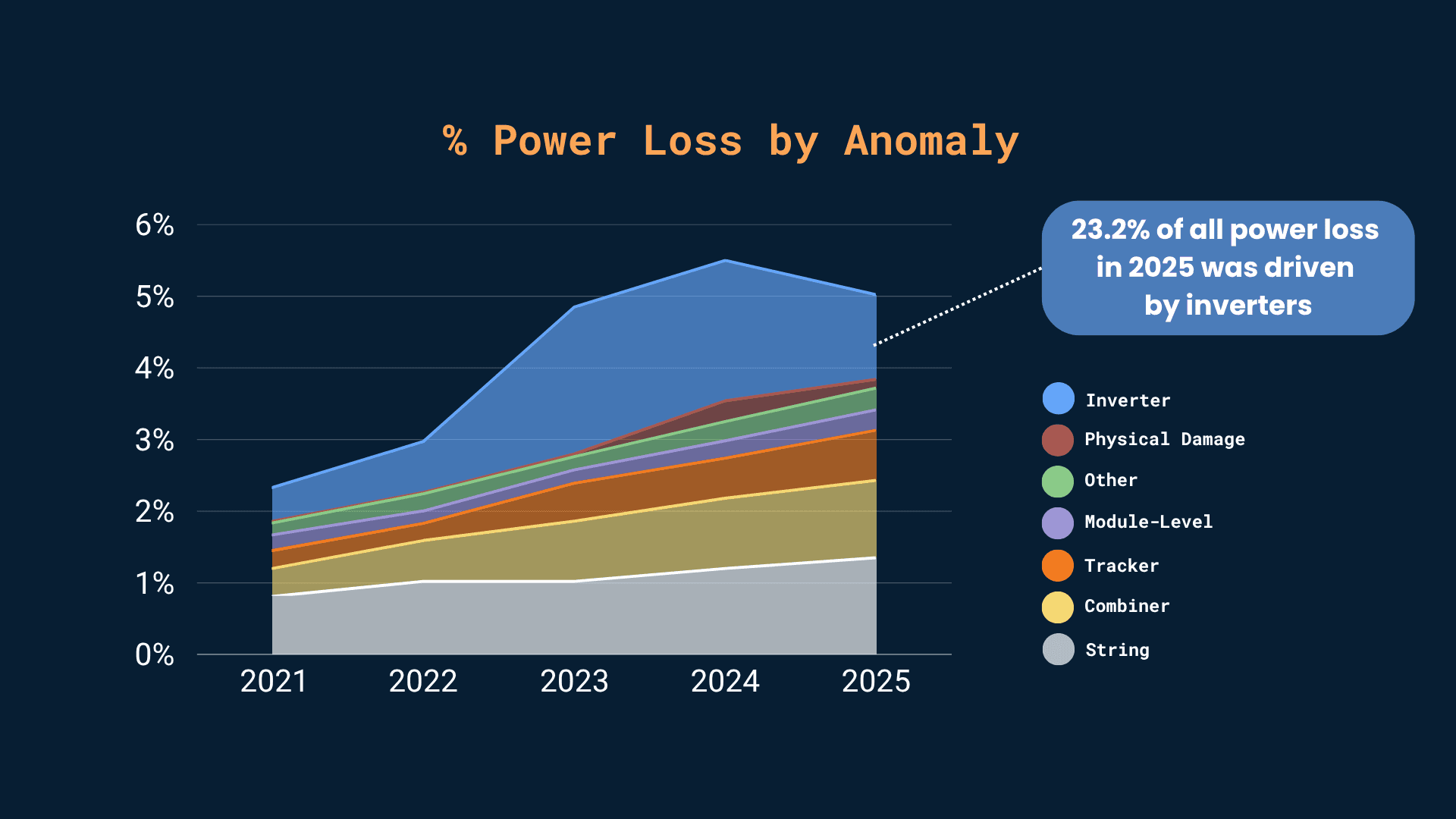
One of the many routine PM inspections that Raptor Maps is automating with robotics is for Inverter Pads, which house a host of complex equipment. As inverter pads contain critical components for energy conversion and delivery, malfunctions here can drive significant energy loss. According to our 2026 Global Solar Report, anomalies on inverters drove the second highest amount of power loss in 2025, trailing only string outages.
With that as context, in this article, we’ll dive into:
A breakdown of what drones can see on an inverter pad inspection
Why these inspections are essential for preventing inverter failure and managing compliance
A case study on how automating PM scope is helping an O&M provider optimize labor efficiency and safety
Why Drone Inspections Are Beneficial for Inspecting Inverter Pads
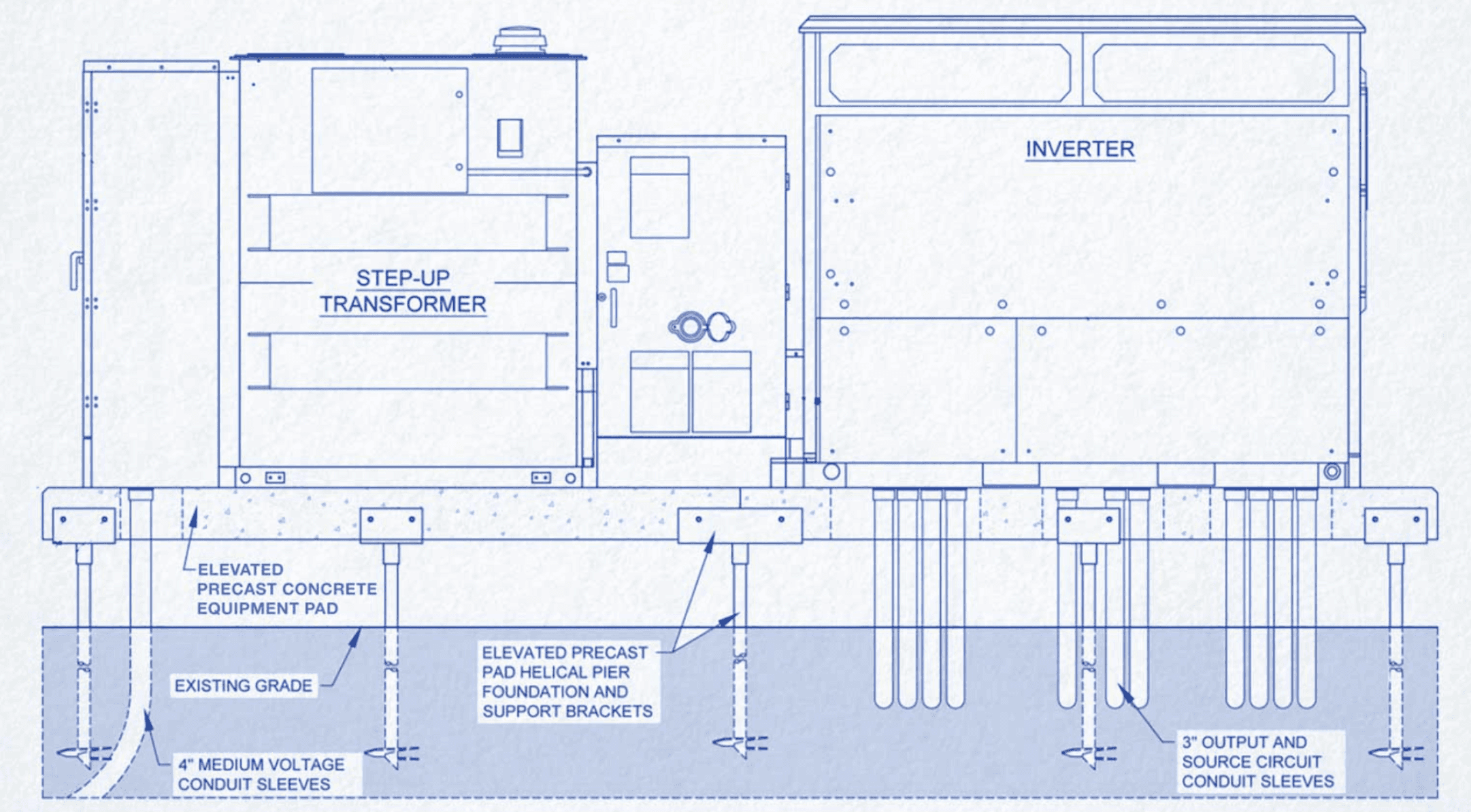
The inverter pad is the concrete foundation that supports an array of equipment including the inverter itself, transformers, switchgear, and SCADA systems. This equipment, which is tasked with converting DC to AC, is highly complex, containing a sophisticated network of cabling, high-precision mechanical cooling fins, and heat-dissipation structures that keep the inverter and transformer operating at the right temperature.
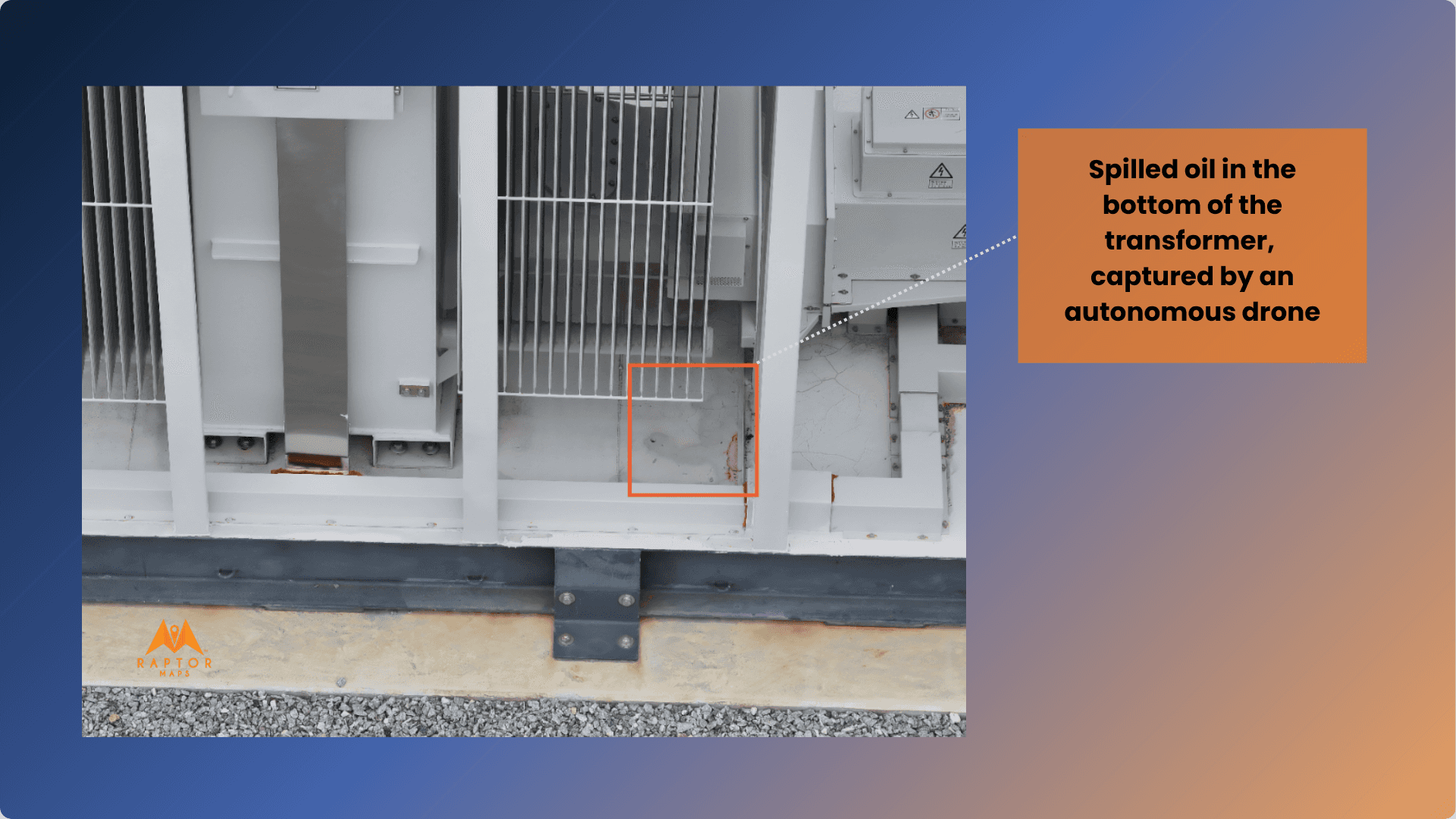
At Raptor Maps, our inverter pad inspections gather data on a vast majority of these components. While drones cannot inspect items housed behind enclosure doors, our autonomous, ROC-monitored flights capture high-resolution imagery from multiple altitudes and orbital angles. This provides visibility into critical failure indicators such as transformer oil leakage, moisture ingress, and enclosure erosion. This level of detail allows our team to identify minute defects—like unbolted doors or loose equipment—that manual inspections might overlook.
And because inverters and transformers represent critical points of failure on a solar farm – one malfunction can disrupt power delivery for a large swath of a site – regular inverter pad oversight is a best practice in proactive, preventative maintenance, especially since we see issues arise on this equipment frequently.
For example, one area we often observe issues on inverter pad inspections is transformer oil leaks. Transformers are filled with oil for cooling purposes, and they dissipate heat through cooling fins on the back of the enclosure. However, we sometimes see that this oil is leaking, indicating there are structural compromises somewhere within the transformer enclosure, like cracked welds or pinholes in the fins. Left unaddressed these issues can exacerbate, potentially leading to a full transformer failure that can cause extended downtime.
In addition to checking cooling systems, regular inverter pad inspections also are important for monitoring vegetation in the area. As weeds are resilient, and can easily grow up into wiring on the underside of an inverter, building a system of oversight to ensure this does not occur is a key fire-prevention and safety protocol.
Beyond mechanical reliability, asset owners and operators face significant legal and financial liability regarding Spill Prevention, Control, and Countermeasure (SPCC) regulations. Allowing spilled oil to leak into the soil or nearby sediment is an environmental violation that can lead to heavy fines, OSHA recordable incidents, and third-party lawsuits. Frequent robotic-driven inspections ensure that asset owners have a continuous digital record of compliance.
Case Study: How Robotics Delivers ROI for Cleanleaf Energy
Over the past two years, major O&M providers have adopted our autonomous drone solution, Sentry, to help design programs that bring operational efficiencies to their technician teams.
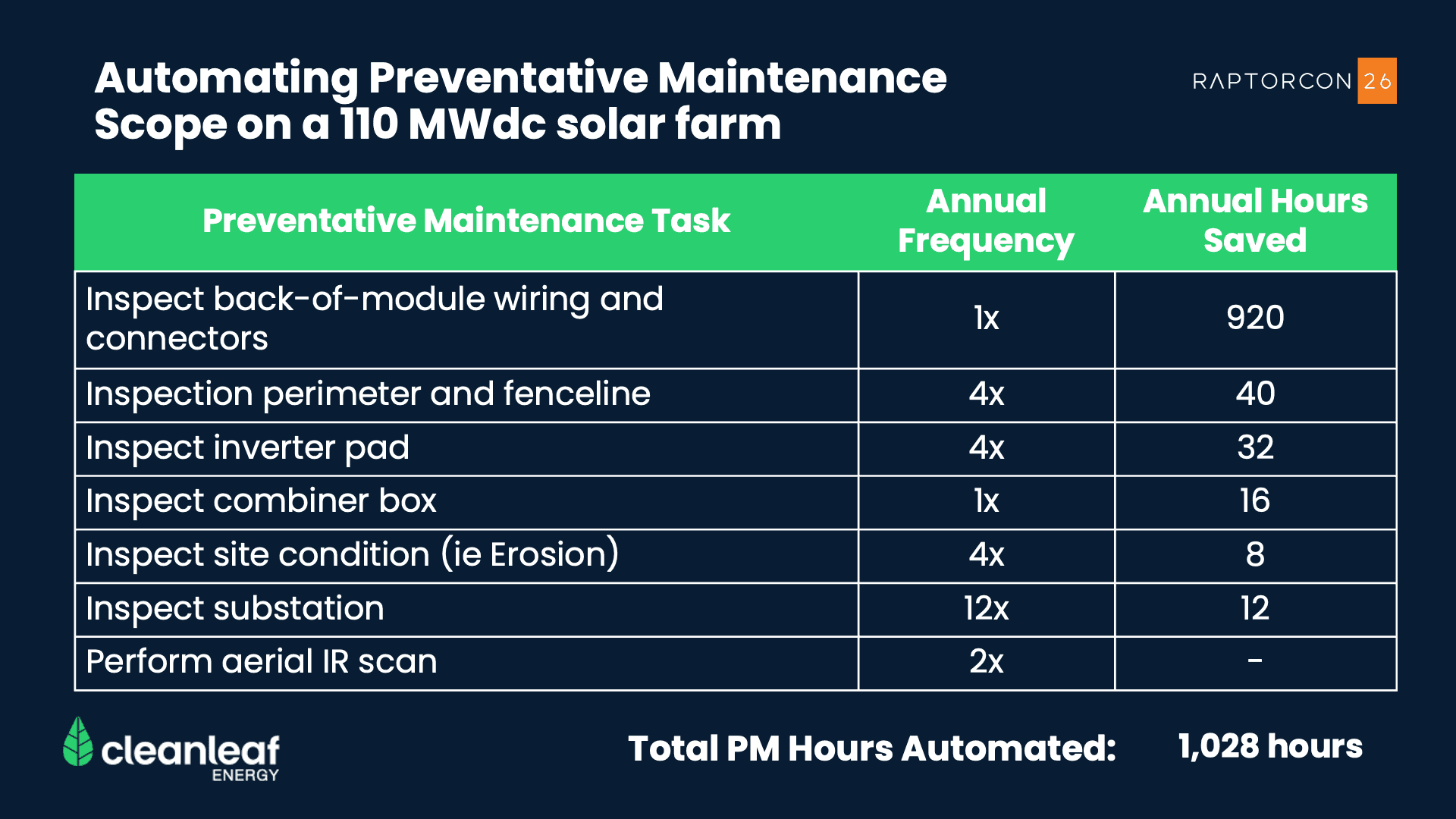
At RaptorCon 2026, Cleanleaf Energy shared how they worked with us to design a protocol for automating significant portions of a technician’s PM scope, including quarterly autonomous-drone-based inverter pad inspections. Beyond inverter pads, Cleanleaf is also automating other previously time-intensive manual PM tasks, including fenceline walks, wiring checks, substation inspections, and environmental condition inspections.
This automation of PM scope has created a number of benefits for Cleanleaf. Critically, it has reduced the need for an additional Level 1 technician, allowing the site to operate with leaner staffing. It has also enabled their team to spend more time on corrective work, which is boosting revenue. Perhaps most importantly, the program is also helping their team operate more safely, reducing exposure to harsh environmental conditions and high voltage equipment.
Conclusion - A Strategic Shift to Proactive Automation
As solar capacity growth continues to outpace labor force growth, traditional O&M models will be tested. Today, because of the rapid growth of solar capacity, an average technician is responsible for 70% more MW than they were 5 years ago. Given these macroeconomic conditions, at Raptor Maps, we believe that we are on the cusp of a paradigm shift in how O&M teams function.
More specifically, we believe that the most efficient operating teams, which are already beginning to embrace automation to augment their workflows, will scale up this technology adoption as the business case for using robotics to automate time-intensive inspections continues to prove itself out.
This trend, we believe, is a win-win for operators and owners. For operators, automation will protect margins by ensuring that site teams, which are already often quite lean, can focus more of their time on revenue-driving corrective work. For owners, the incorporation of automation into their operations will drive more transparency into the nuanced indicators of site performance, enabling performance engineers to build a more robust virtual presence across their portfolio and make data-backed decisions that catalyze performance increases.
And, if you’d like to read more about what our data already says about the business case for investing in robotics, please download our 2026 Global Solar Report, which synthesizes over 373 GW of inspection data as well as over 15 GW of data from our robotic deployments to date.
See the Inverter Pad Inspection in our Platform
Access an Interactive Demo of the Inverter Pad Inspection, including Digital Twin walkthrough, here (desktop or tablet required).
Ready to automate your PM scope?
From civil conditions to transformer health, Raptor Maps provides the up-to-date intelligence your team needs to work effectively and safely.
Next steps
From the civil engineering on your site down to the wiring on the back of your panels, the Raptor Solar platform provides you detailed, up-to-date data on the conditions and performance of your solar fleet so that your team has the intel they need to do their jobs effectively, quickly, and safely.