This article was originally published in the kWh Analytics 2026 Solar Risk Assessment Report. Download the full report here.
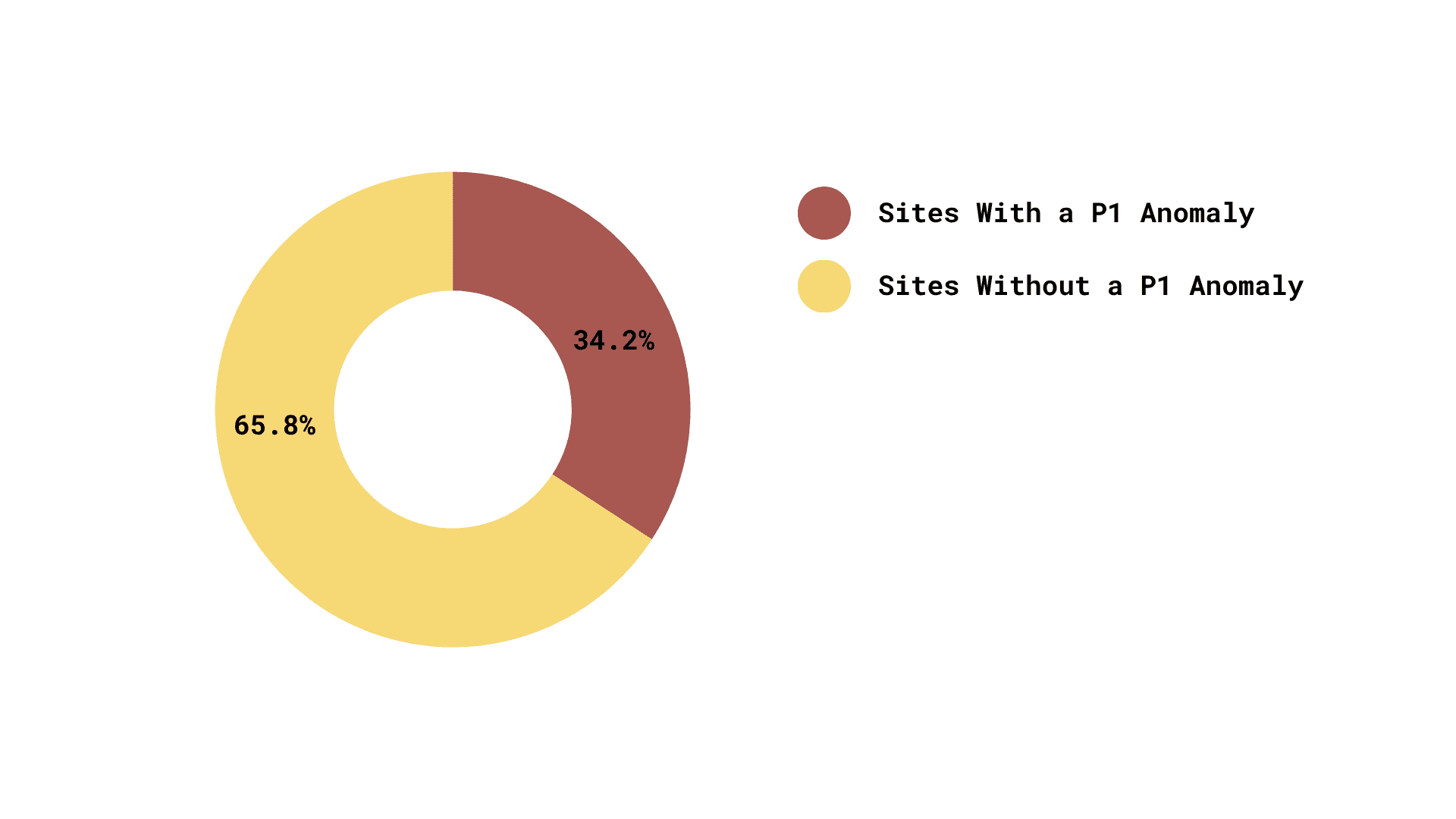
While solar assets have a number of components that can affect portions of sites if they malfunction – inverters, trackers, and combiners to name a few – substations are the ultimate single point of failure on a solar farm. A critical malfunction on a substation doesn’t just reduce efficiency, it disrupts 100% of power delivery to the grid. And according to Raptor Maps data, high priority issues on substations are arising frequently. In fact, in 2025, of the substations Raptor Maps inspected more than once, 34.2% contained a ‘P1’ anomaly – defined as a critical defect where immediate follow up action is suggested to prevent a critical component failure.
So why are these critical components showing such high rates of distress?
The main culprit is that solar produces variable energy loads, which substations are historically not designed to tolerate. Unlike traditional baseload from fossil fuel generation which is more consistent across time, the rapid ramp-up of current as the sun rises, followed by sudden drops during cloud cover or sunset, creates fluctuation in load within physical connections on substations on solar farms. Over time, this can lead to accelerated aging of connections, switches, and transformer components. These minor attritional defects, if left undetected, can escalate into component failures that can cause entire site outages, costing asset owners hundreds of thousands of dollars within days.
These defects often show up as thermal signatures on a subcomponent that are hotter than adjacent components. Common issues that have been found on substations with drone inspections include hot hook switches, current cut-outs, and an array of wiring issues.
The Takeaway for Asset Owners and O&M Teams
Given that a substation failure can shut down 100% of site output, and given the frequency of P1 anomalies observed in the 2025 dataset, Raptor Maps believes that routine thermal inspections should be treated as an intentional risk-control measure.
Our baseline recommendation to the asset owners that we work with is a quarterly thermal inspection cadence. However, for aging equipment, or on sites in high variability environments, we’ve seen site teams employ a more aggressive approach, inspecting substations, in some instances, monthly. As solar capacity continues to scale and become an increasing proportion of the global energy mix, we believe that updated protocols for risk management, like increasing the frequency of substation inspections, will become the status quo playbook for best practices in risk mitigation.
Next steps
From the civil engineering on your site down to the wiring on the back of your panels, the Raptor Solar platform provides you detailed, up-to-date data on the conditions and performance of your solar fleet so that your team has the intel they need to do their jobs effectively, quickly, and safely.