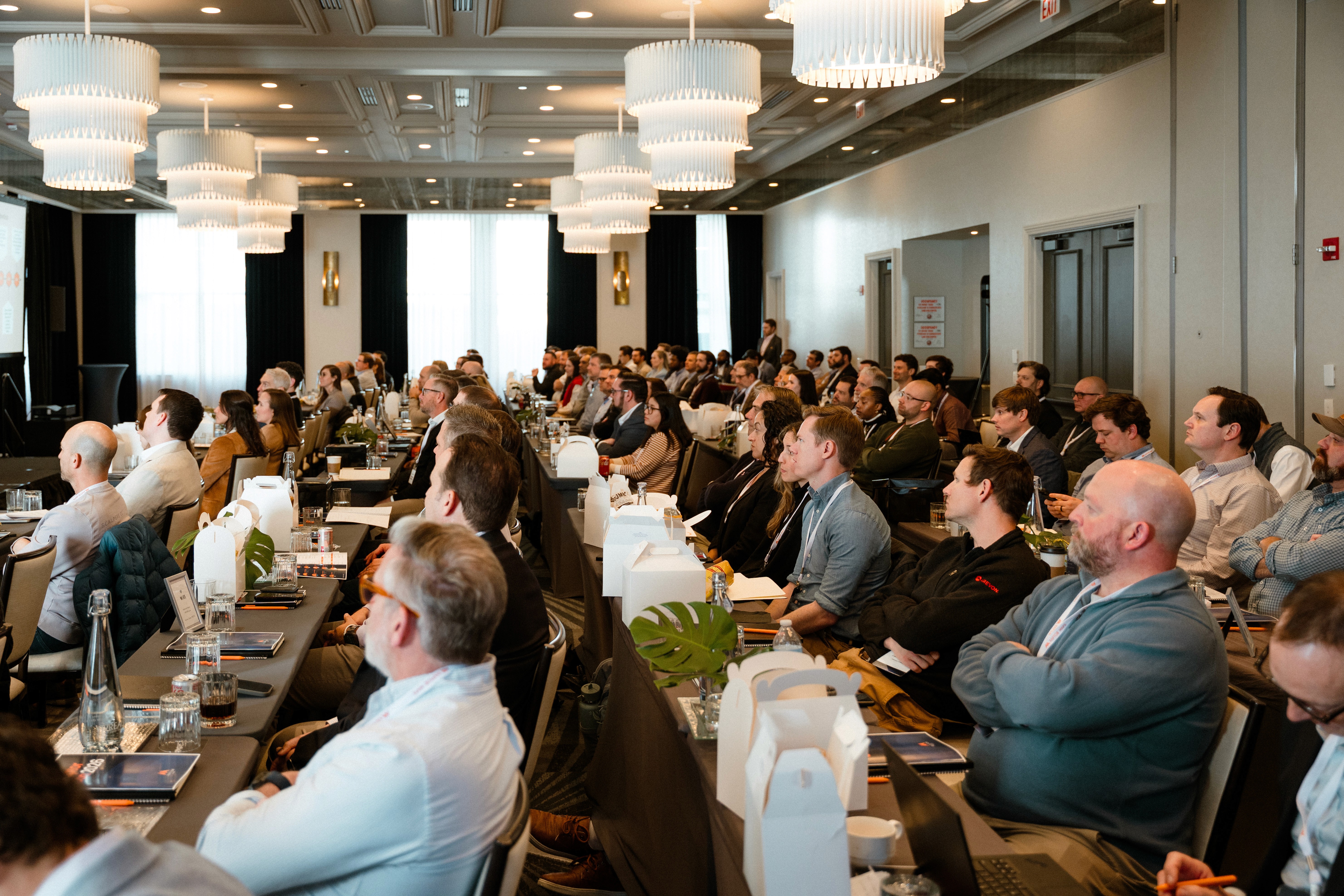
In February, we hosted our 4th annual RaptorCon—a gathering that has become a vital pulse check for leaders across the solar value chain—with more than 100 solar industry leaders joining us in Chicago. Broadly, this year’s event centered around a growing theme across the industry: how technology is fundamentally rewriting the way we manage the world's rapidly expanding solar infrastructure.
But what made this year’s conversations so powerful wasn't just the focus of the event, it was also the diversity of voices on stage. We intentionally brought together an array of perspectives: from pure-play IPPs and owner-operators to O&M providers and EPCs. We also heard from insurance underwriters, independent engineers (IEs), owner's reps during construction, and robotics teams building the future of the field.
Despite their different roles in the ecosystem, these voices converged around two distinct thematic pillars:
The Macroeconomics of Solar – On Day 1, we explored the big-picture conditions – from labor scarcity to the explosion of data center demand – that are forcing a shift in how solar farms are financed, built, operated and managed.
Managing Risk – Day 2, on the other hand, shifted the conversation towards risk and resilience. We focused our time on talent retention, OEM manufacturing issues, NERC-CIP compliance, technician safety, and technical risks like substation anomalies and connector-driven fires.
Across this wide array of experts and topics, several key themes emerged that illustrate where the industry is headed.
For asset owners, there is a tangible ROI on deploying robotics, which are helping to both mitigate downtime risk and boost energy production
RaptorCon featured numerous conversations that explored the ROI of robotics. A major theme within these discussions was how more frequent inspections carried out by autonomous drones are key on both sides of the profit equation, with panelists commenting on how robotics can help boost energy production and manage against risk of unplanned downtime.
When it comes to increasing production, first we learned about the important role that drones can play during commissioning. Speakers noted that today, while a typical QA/QC process during commissioning only covers roughly 10-20% of a site and sites are often handed over with significant power loss already, with drones, that coverage increases significantly, which has helped lead to healthier sites upon COD.
When the discussion turned to ongoing operations, we heard that the additional site-health data provided by autonomous drones helped keep assets performing well. In particular, Dave Martin, Manager of Business Operations at Lightsource BP, mentioned that more frequent asset health data was critical for identifying and triggering remediation cycles on some of the smaller, attritional drivers of DC underperformance, like strings, which our 2026 Global Solar Report showed to be the number one contributor to power loss on solar farms last year.
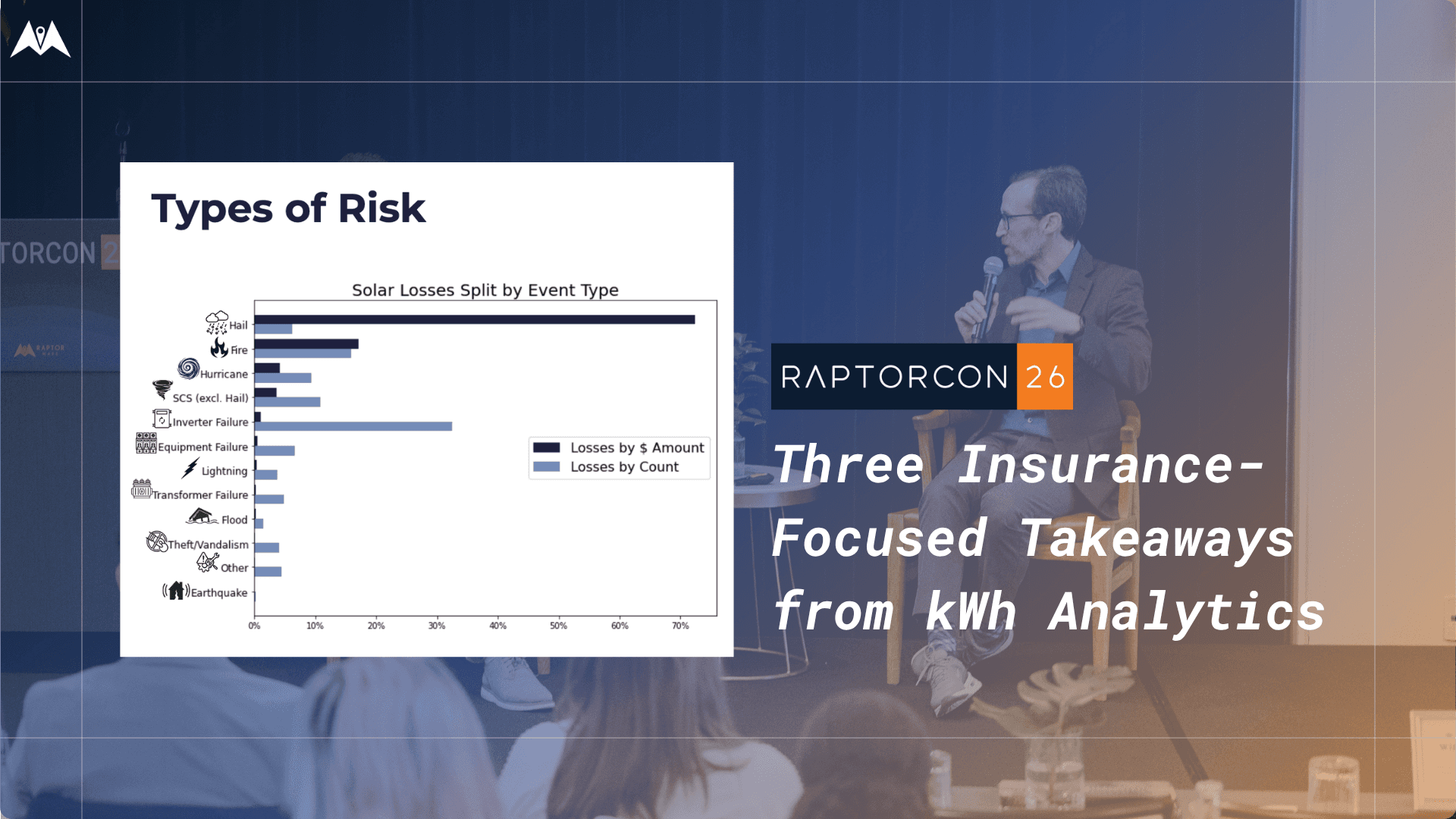
On the other side of the equation, we also talked about how robotics and technology can be used as risk mitigation tools. Jason Kaminsky, the CEO of kWh Analytics, a leading insurance provider for renewable energy assets, discussed how the increase in performance data, in part driven by robotic technologies, is helping underwriters become more savvy about asset insurance premiums. A takeaway from this conversation was that to drive down premiums in the long term, more clear protocols for proactive maintenance and risk reporting need to be adopted in the industry.
In a labor-scarce market, hiring, training, and retaining talent is hard. This is leading O&M companies to adopt automation to fill gaps
Another theme that emerged centered around pressures facing O&M teams. One of these pressures was labor availability. Today, as solar capacity continues to outpace labor growth within the industry, solar technicians are responsible for 70% more MW than they were 5 years ago. And, as assets continue to get bigger – a second pressure shaping the O&M industry – traditional operating models that were designed for much smaller sites are beginning to crack, with speakers noting that labor costs have spiked 40% over the last 18 months in some markets.
These macroeconomic forces combine to create a third pressure, which is talent retention. Even though our panels were largely made up of executives and directors, there were multiple callouts acknowledging that technicians have very challenging jobs, with lots of safety risks, that are only getting harder as sites get bigger and teams get stretched thinner. This led to conversations on how to create better conditions to help retain this talent.
To further explore this topic, Eddie Obropta, Raptor Maps’ Chief Technology Officer showed how autonomous drones are now technologically adept at replacing many of the repetitive, hazardous field tasks on a preventative maintenance schedule, which is helping technicians focus their time on fixing issues. This idea was validated by the team at Cleanleaf, which is using docked drones to augment their team’s productivity in the field. During Cleanleaf’s presentation, they reviewed a case study where they project that they will be able to save over 1,000 hours of preventative maintenance scope this year on a 110MW site using autonomous drones, which is helping to make their business more efficient and profitable.

Safety is an omnipresent concern on solar farms that needs to be addressed through more standard operating procedures
Across panels and presentations, we heard frequently about the risks that solar technicians face. Not only do they often have to work in extreme temperatures with exposure to potentially hazardous wildlife, they are also dealing with high voltage equipment. Furthermore, as David Devir, the Principal Engineer at VDE, pointed out, this electrically charged equipment is often predisposed to malfunction, either because it was manufactured or installed improperly, which puts technicians at greater risk.
In light of this, panelists discussed how creating conditions, using technology and robotics, to reduce these risks can become a competitive advantage in attracting labor, especially in scarcer markets.
Conclusion
RaptorCon has always been a forum to have candid conversations about real issues and opportunities facing the solar industry, and this year was no different. The discussions at RaptorCon 2026 signified to us that the solar industry is at an inflection point, where traditional manual management processes are beginning to give way to ones defined by intelligent, strategic automation. This shift is already driving optimization on multiple fronts. It is helping builders perform more robust and frequent QA/QC to ensure that sites are healthy at handover; it is enabling operators to work more safely and efficiently; and it is helping asset owners improve returns by driving up production and driving down risk.
Thank you to everyone who attended RaptorCon this year and made the event so rich and unique - we already can’t wait for next year!
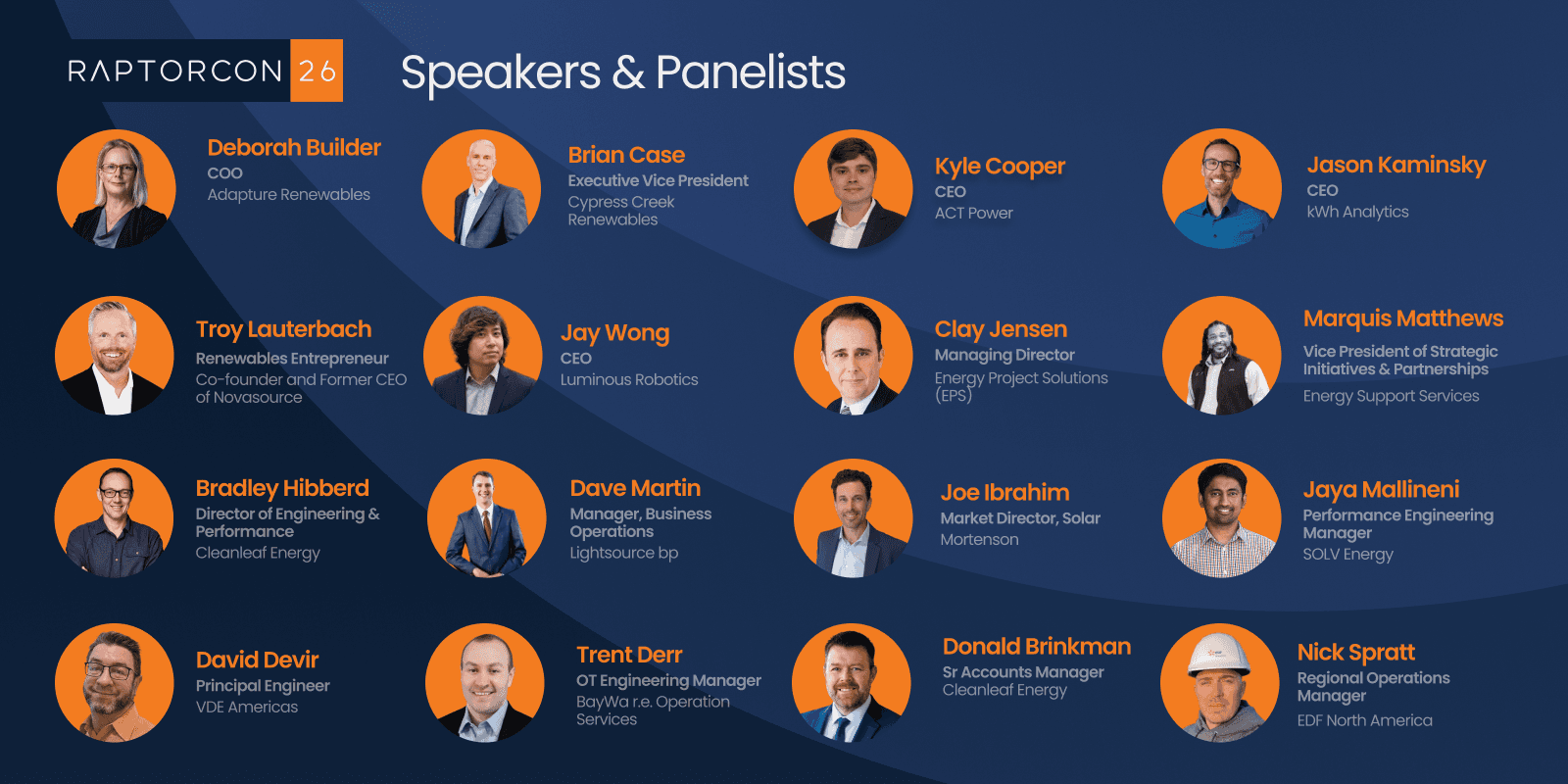
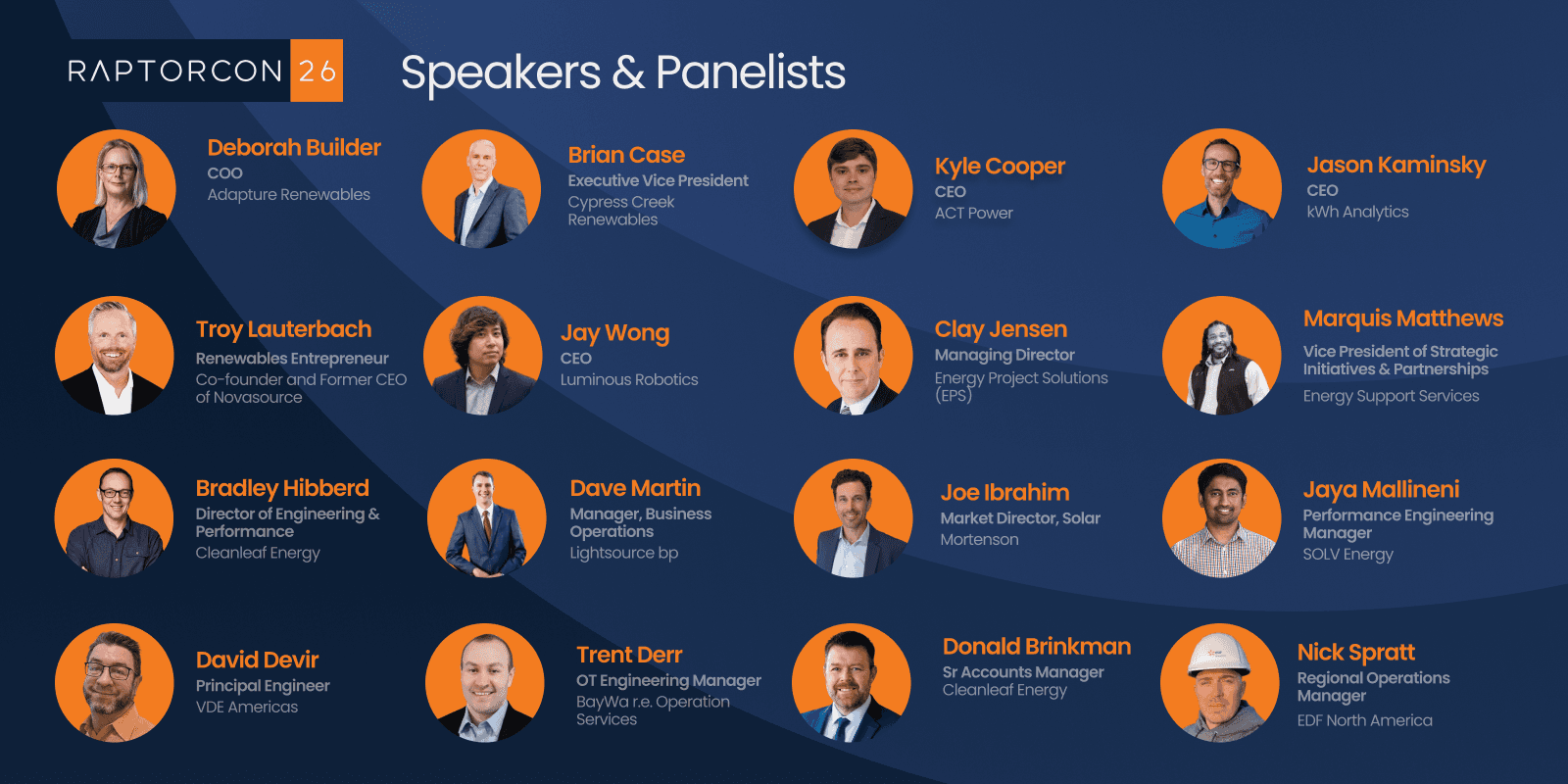
And special thank you to our speakers:
Brian Case, EVP of Solutions (Cypress Creek Renewables)
Deborah Builder, COO (Adapture Renewables)
Kyle Cooper, CEO (ACT Power)
Troy Lauterbach
Jason Kaminsky, CEO (kWh Analytics)
Jay Wong, CEO (Luminous Robotics)
Clay Jensen, Managing Director (Energy Project Solutions)
Marquis Matthews, VP of Strategic Initiatives (Energy Support Services)
Joe Ibrahim, Market Director, Solar (Mortenson)
Bradley Hibberd, Director of Engineering and Performance (Cleanleaf Energy)
Dave Martin, Manager of Business Operations (Lightsource bp)
David Devir, Principal Engineer (VDE Americas)
Jaya Mallineni, Performance Engineering Manager (SOLV Energy)
Nick Spratt, Regional Operations Manager (EDF North America)
Trent Derr, OT Engineering Manager (BayWa r.e. Operation Services)
Donald Brinkman, Sr. Accounts Manager (Cleanleaf Energy)
Next steps
From the civil engineering on your site down to the wiring on the back of your panels, the Raptor Solar platform provides you detailed, up-to-date data on the conditions and performance of your solar fleet so that your team has the intel they need to do their jobs effectively, quickly, and safely.