
Single-axis trackers have become the default racking choice for utility-scale solar. Because they track the sun’s movements, they meaningfully boost energy yield throughout the day. But they also come with an added mechanical complexity that introduces increased risk of error.
According to Raptor Maps' 2026 Global Solar Report, power loss from tracker issues jumped 25% year-over-year in 2025 and now accounts for nearly 14% of the total equipment-driven underperformance across our dataset. In fact, over the last five years, DC capacity loss driven by malfunctioning trackers has doubled in our data set.
Unlike a tripped inverter, or a connector-driven fire, tracker failures tend to be quiet. They can accumulate gradually, get misread by monitoring systems, or simply go undetected until someone physically verifies that they are out of alignment.
This is a major risk factor, for trackers don't just affect energy yield – during hail season, they are the primary line of defense against module damage. When a hail event is forecast, trackers receive a command to move to a stow position, typically a steep angle that deflects hailstones rather than absorbing direct impact. If rows don't reach that angle, those modules are exposed.
The Problem: SCADA Says Everything Is Fine
Modern tracker control systems, including Programmable Logic Controllers (PLC), SCADA platforms, and telemetry dashboards, are excellent at confirming that commands were sent and acknowledged. What they can’t confirm is whether the physical outcome matched the intended command.
This gap is well-documented in the field. A controller can log a successful stow command while a misconfigured PLC value, a mechanical binding issue, or a firmware edge case prevents rows from actually reaching the target angle. From a digital monitoring perspective, everything looks normal. On the ground, or from the air, the reality is different.
This is an under-discussed failure mode in tracker operations: not mechanical failure, but verification failure.
What Happened at a Large IPP Portfolio Site
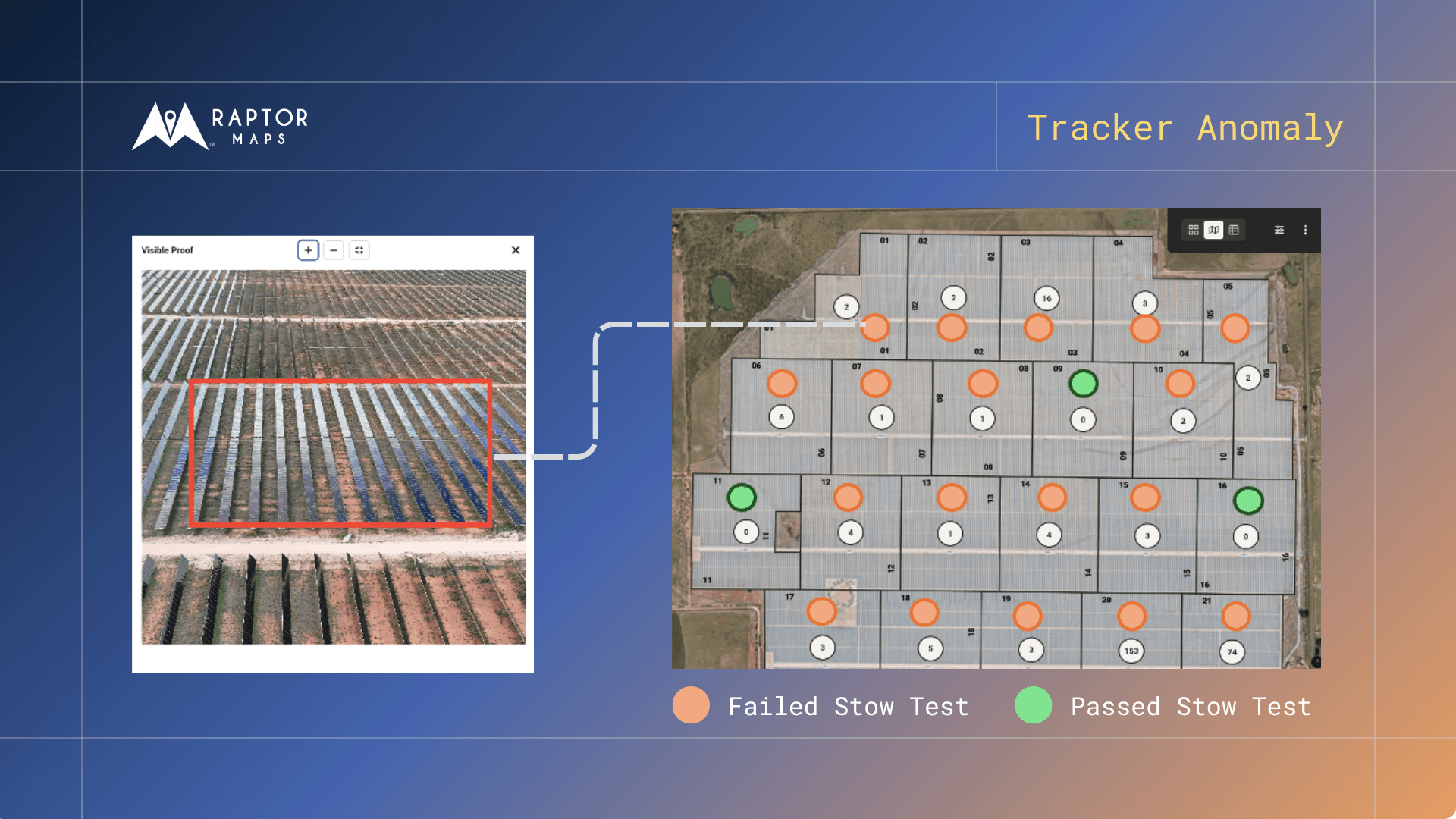
During Tracker Stow Verification inspections at three utility-scale sites totaling over 200 MWdc, the Raptor Maps team leveraged Sentry, our autonomous drone solution, to visually confirm tracker positioning following a stow command. During that inspection, it was observed that over 550 trackers were not reaching the expected 52-degree hail stow angle despite backend SCADA data indicating they had responded to the command as expected.
The performance engineering team, working from controls data alone, would have had no reason to investigate further. As the customer confirmed on the post-inspection call, without the Raptor Maps flyover, they likely would not have known the issue was occurring.
The root causes for this malfunctioning were twofold. First, an incorrect PLC configuration value was causing SCADA systems to report that stow was happening correctly. Second, some blocks had malfunctioning Network Control Units (NCUs) after some evening substation work had required the site to power down.
In both cases, these are failure modes that are quiet. From a performance engineer’s perspective, systems were operating fine. But only with physical verification were these issues, which could have persisted for months, identified and remedied.
What Tracker Stow Verification Actually Does
Raptor Maps' Tracker Stow Verification inspections are designed specifically to close the gap between command and reality. The workflow is straightforward: issue a stow command, fly the site, visually confirm row angles via autonomous drone imagery, and flag any rows that don't match the target position.
The value isn't technical complexity; it's the act of independently verifying physical outcomes that monitoring systems can't confirm on their own without needing to truckroll a technician or drone pilot out to site.
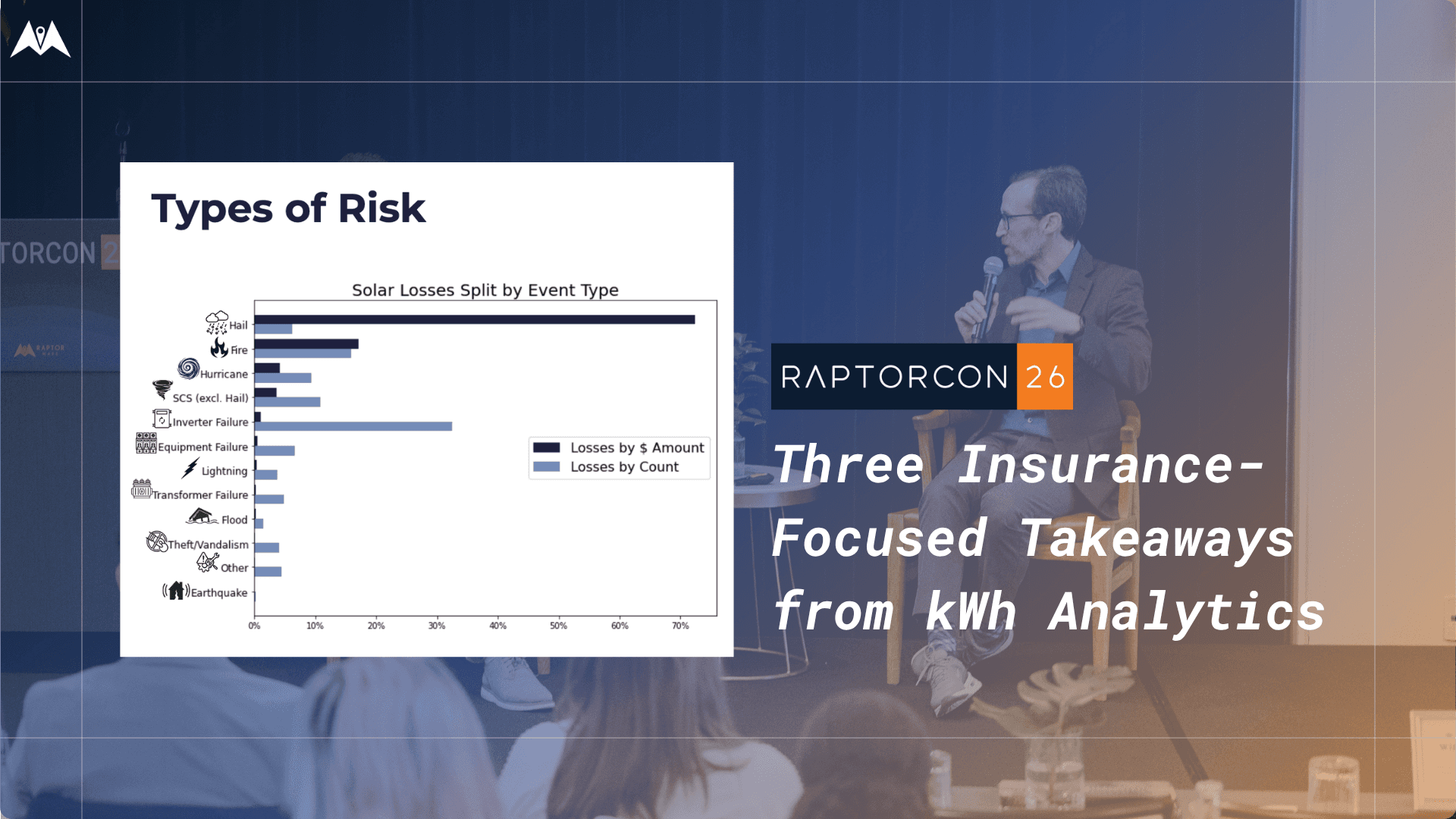
When we recently sat down with Michael Perron, a 20 year veteran of the solar insurance industry, he said that consistent, independent hail-stow verification was the data point that he would most like to see from his clients. Jason Kaminsky, the CEO of KwH analytics, another provider of solar insurance, echoed this sentiment a few months earlier. During his presentation at our user conference, RaptorCon, Jason said that hail stow is the single most underwritable action an asset owner can take.
Given that tracker-related losses are rising across the industry and hail remains one of the most costly perils in solar insurance, for assets operating in hail-prone regions, Tracker Stow Verification is increasingly becoming a standard pre-season protocol.
As asset owners continue to think holistically about setting up risk management programs that systematically identify threats to critical infrastructure, tracker stow verification is now table stakes given how low the cost of verification is relative to the risk that it mitigates. More generally, with the increasing technical complexity of solar assets and their reliance on digital signals to indicate physical performance, spot checks that verify this performance at regular intervals need to be integrated into maintenance plans. At Raptor Maps, we strongly believe that autonomous drones are the most cost effective way to precisely do this at modern utility scale.
Next steps
From the civil engineering on your site down to the wiring on the back of your panels, the Raptor Solar platform provides you detailed, up-to-date data on the conditions and performance of your solar fleet so that your team has the intel they need to do their jobs effectively, quickly, and safely.